Industrial Roofing Sheets: Types, Benefits & How to Choose the Right One}

13
Apr
Industrial Roofing Sheets — Types, Benefits & How to Choose the Right One | Mangla Roofing
Why Roofing Is the Biggest Decision You Will Ever Make on your Property
When you construct a house, a warehouse, a factory each and every choice of material counts but a roof over your head. The roof is not merely a cover, it is a protection against rain, heat, storms, time. In India, particularly, when summers are scorching, monsoons severe, and winters can be unpleasantly vile in the north, the selection of the appropriate roofing sheet can spell the difference between a construction that lasts 30 years and one that requires constant maintenance during the other seasons.
The majority of the people waste a great amount of time selecting tiles, colour of the paint and the interiors - but hardly any about what is put on the roof. This is a mistake. The choice of roofing material has a direct impact on the energy efficiency, maintenance costs, safety and the general life of your building. It is the wiser to start with the industrial roofing sheets whether you are building a new house in a tier-2 city or diversifying your industrial plant since the types, properties, as well as the performance criteria of these sheets, are the key to success. Such brands as Nataraj Roofing have been a part of this industry discussion long enough and today one may find a broad variety of technically advanced products worth considering in the market.
What Are Roofing Sheets in the Industry and Why are They So famous?
Industrial roofing sheets are custom designed metal or steel or polymer composite panels that come in large spans with little support. In contrast to the old clay tiles or slabs of cement, these sheets are lightweight, easy to put in place and constructed in such a manner that it can withstand weather conditions that are extreme. They are popularly installed in residential structures, commercial, warehouse, poultry farms, factories and even farm sheds.
The popularity of these products has been increasing in the past 20 years since they are affordable, strong yet low-maintenance. An aptly placed roofing sheet never cracks, warps or takes up water in the manner the older ones are likely to do. This renders them particularly useful in areas where temperature variations are extreme or areas receiving a lot of rainfall.
The type of industrial roofing sheets you ought to learn about
Knowledge of the various types will aid you in making a wise decision considering your individual use scenario, funds and location.
Galvanised Iron (GI) Roofing Sheets
One of the most popular roofing materials in India is galvanised iron sheets. They are prepared by plating steel with zinc which covers the base metal against rust and corrosion. GI sheets are robust, inexpensive and come in different profiles and thicknesses. They are very effective in industrial sheds, warehouses and affordable residential roofing.
The long life of GI sheets when maintained is one of the greatest benefits of GI sheets. The zinc coating is a shield against moisture and other atmospheric elements, and this is especially required in coastal areas and high humidity areas.
Colour Coated Roofing Sheets
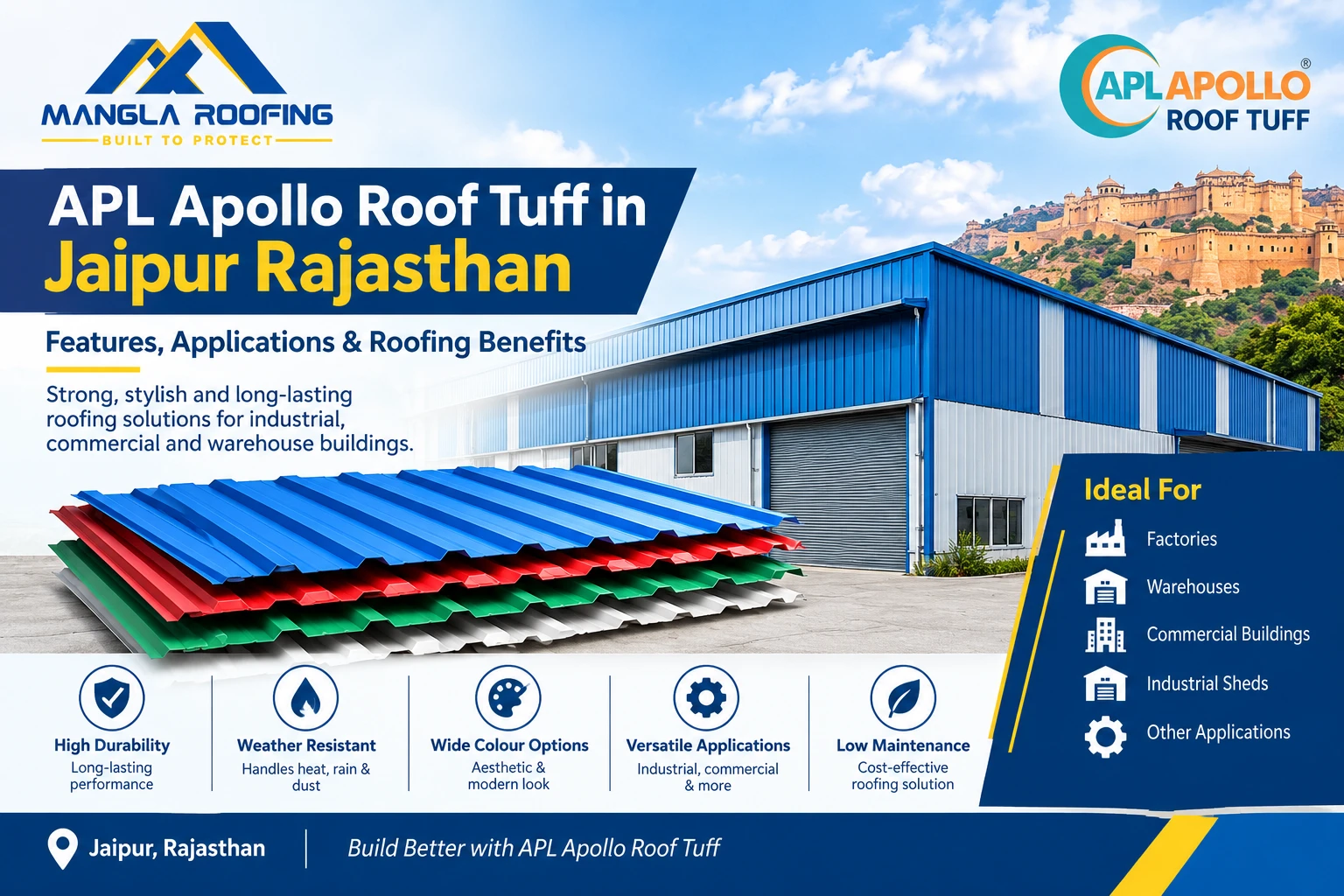
GI or galvalume sheets coated with a layer of polyester or PVDF coating on the surface are colour coated sheets. The coating does not only give appeal to the structures but also gives them an additional protection against UV rays, acid rain and industrial pollutants. These sheets are used in residential houses and commercial buildings whereby, appearance is a key factor in addition to functionality.
The colour coating also minimises heat gain and hence interior spaces are cooler in summer which is a great advantage in a state like Rajasthan, Gujarat and Madhya Pradesh where temperatures often exceed 40C.
Galvalume Roofing Sheets
Galvalume sheets are produced by an alloy of zinc, aluminium and Silicon. Galvalume has much greater resistance to corrosion than standard GI sheets - two to four times longer life span in many environments. They are also lightweight, very reflective and thermally efficient.
The sheets are suitable in long-span industrial buildings, poultry houses, and cold storage buildings where a consistent performance lasts more than several decades is a non-negotiable condition.
Polycarbonate and Translucent Roofing Sheets
All roofing requirements are not concerning steel. Polycarbonate and FRP (Fibre Reinforced Plastic) transparent sheets are common in places where natural lighting is required without jeopardizing weather-resistance. The metal roofing is commonly used with translucent sheets in factories, greenhouses and large commercial halls to save a lot of money in artificial lighting.
Such sheets are also impact-resistant, UV-stabilised and come in varying degrees of transparency, which is based on the degree of light diffusion needed.
The Essentials to Watch when purchasing Roofing Sheets
A catalogue of roofing sheets is a sure way to spend more money in picking one that is not right to your conditions. These are the most critical aspects that you should consider.
Thickness and Gauge
Roofing sheet thickness is directly proportional to the strength and load bearing capacity. Heavier sheets are more resistant to wind uplift and are better in areas of industry or high winds. In residential applications, standard thickness is sufficient, however, on large span industrial applications, it is always safe to use a higher gauge after consulting a structural engineer.
Coating Type and Durability
The nature of the protective coating will dictate the duration that your roof can be strong without being maintained. In most situations, zinc-aluminium alloy coatings perform better than plain zinc coatings. A PVDF-coated sheet is worth the additional cost, in case your site is close to a coastline or an industrial area with such chemical emissions in the air.
Profile and Design
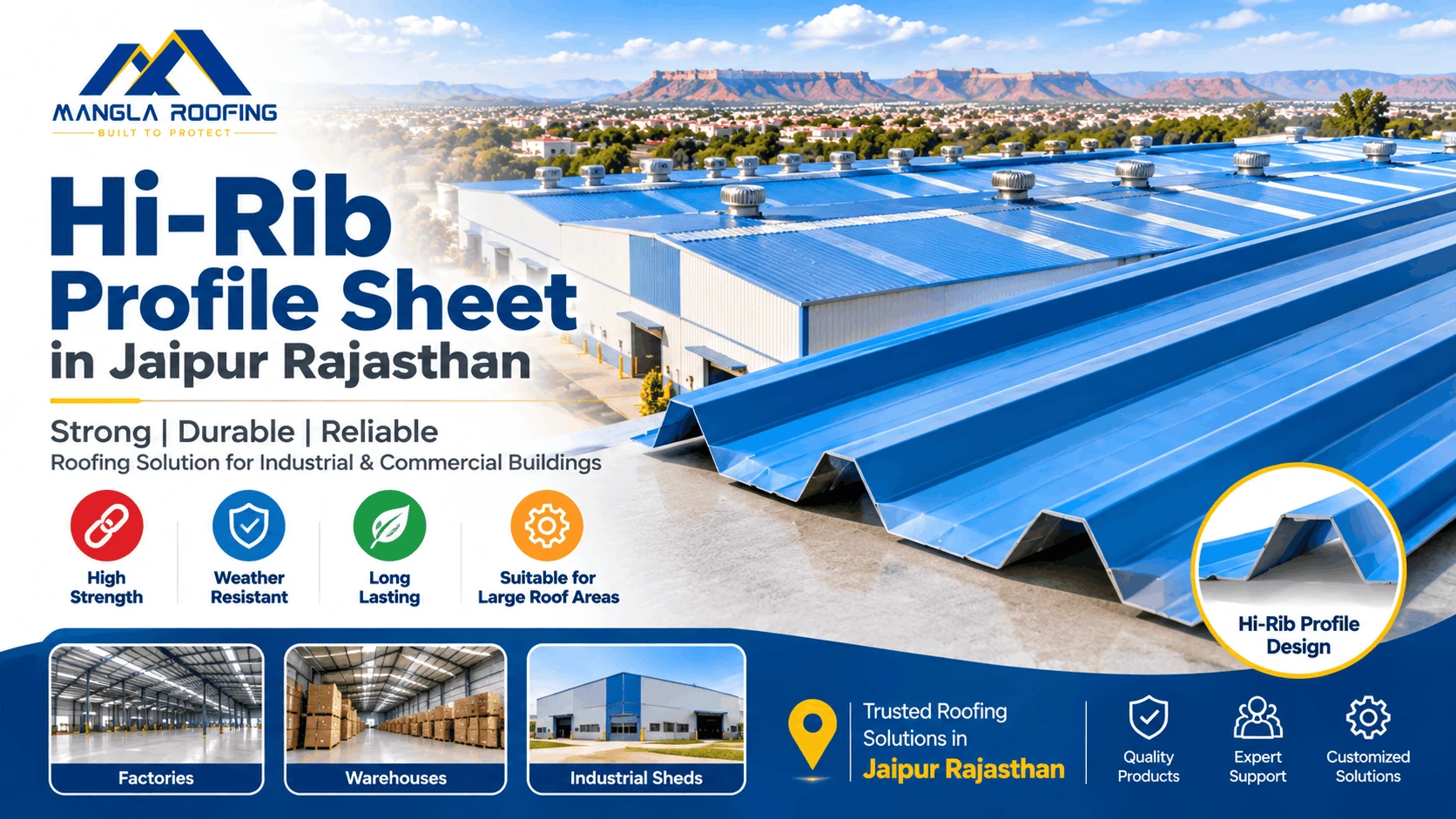
Roofing sheets are available in various profiles in trapezoidal, corrugated, standing seam roofing, and box profile roofing among others. The profile influences the aesthetic feel as well as the drainage capacity of the roof. Corrugated sheets, such as have been a traditional option due to being more rigid and easy to install, where standing seam profiles provide a more modern appearance to top-rate construction projects.
Thermal Performance and Energy Efficiency
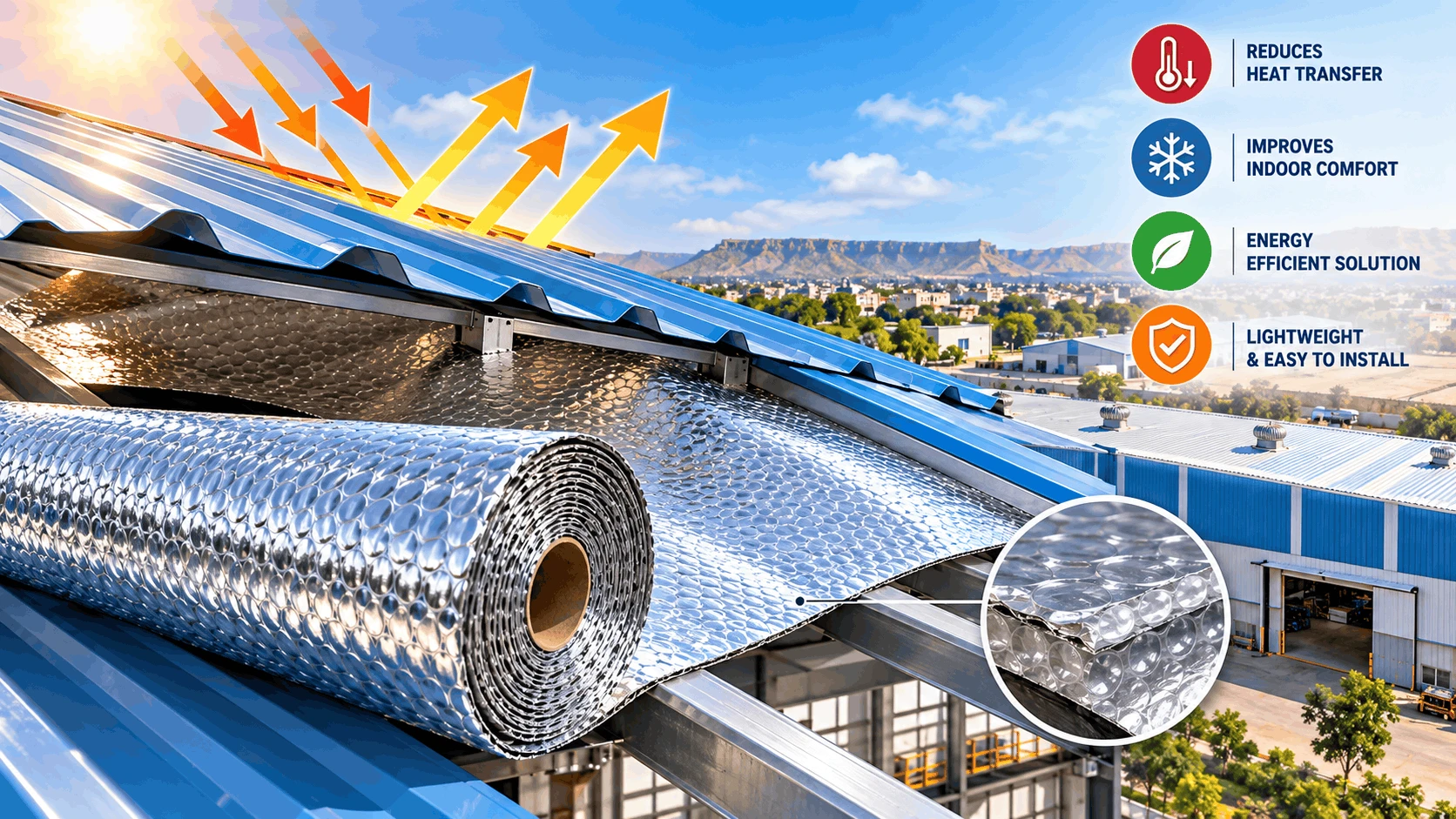
An absorptive and retentive roof will significantly increase cooling expenses within your building. Whenever selecting the roofing sheets that will be used in a home or office premises, seek those that have reflective coating or have insulation panels installed below the roof. Most industrial roofing systems currently are designed with an integrated thermal insulation layer that greatly decreases the HVAC loads.
Wind Resistance and Load Capacity
The various geographic regions in India are associated with various weather conditions- coastal Andhra is prone to cyclonic winds, Himachal Pradesh is prone to heavy snowfall and Kerala is prone to torrential rains. The sheet roofing should be graded according to the environmental loads that your structure is going to experience. Cross-match the technical specifications and local building codes and purchase only after cross-checking.
Installation -The First Time is the Last Time
A roofing sheet of the finest quality will not perform well when improperly installed. Proper installation involves having the proper slope to drainage, the proper fasteners and sealants, proper overlaps of the sheets and ensuring that the underlying structure is well aligned.
A large number of constructors also cut corners in installation to save time or money and this is normally revealed in the future as leakages, noises in rain or premature rusting at the points of fasteners. Always use seasoned roofers that know the exact system you are installing and never omit manufacturer-guideline suggestions.
Conclusion
A roof is not an area where you want to compromise. The type of material you use today will create maintenance headaches, energy bills, and structural safety in the next 20-30 years. Industrial roofing sheets GI, galvalume, colour coated and translucent all have their purpose and the most intelligent buyers are the ones who find the fit between the product and their actual need and do not necessarily just compare prices.
Knowledge of the type, coatings, profiles and performance needs will enable you to ask the correct questions and make a purchase that really adds value. With its various industrial roofing sheets and steel solutions, Mangla Roofing is dedicated to assisting homeowners, builders and industrial customers to discover roofing that is long-lasting, water-resistant and long-lasting. And when your roof is just so, the rest of your house will be safe and that calm is worth the rupee you laid out to purpose.
FAQs:-
Q.1: What is the difference between GI and galvalume roofing sheets?
GI sheets are steel covered with zinc, and galvalume sheets are zinc-aluminium-silicon alloy-coated. Galvalume is more resistant to corrosion and should last twice or even four times longer than regular GI sheets, thus greatly preferred in long-term industrial and commercial use.
Q.2: What is the average duration of the industrial roofing sheets?
Galvalume and colour coated sheets have a life span of 25 to 40 years with appropriate installation and maintenance. GI sheets have a service life that ranges between 15 and 25 years based on the thickness of the coating, environmental factors and the maintenance of the roof throughout the years.
Q.3: Can colour coated roofing sheets be used in hot climates such as Rajasthan?
Yes, absolutely. Reflective PVDF or polyester coloured sheets offer great benefits to hot and sunny environments. They also help in reflecting a good percentage of the sun rays, which lessen the amount of heat that gathers in the building and hence, saves a lot on the expense of air conditioning during peak seasons in summer.
Q.4: Is it possible to use industrial roofing sheets in residential houses?
Yes. The sloped roofs in many residential projects in India have adopted colour coated or galvalume sheets due to their light weight, durable and low maintenance. They are also less expensive compared to traditional RCC roofs on large bungalows, farmhouses and independent homes.
Q.5: What is the thickness of roofing sheet that I should select when use in a factory or warehouse?
In the case of large spans of industrial structures and increased wind or snow load, the thickness of sheets between 0.50 mm and 0.80 mm is usually suggested. The specification should always be finalised with consultation of a structural engineer depending on your local wind speed data, load requirements and length of span.